
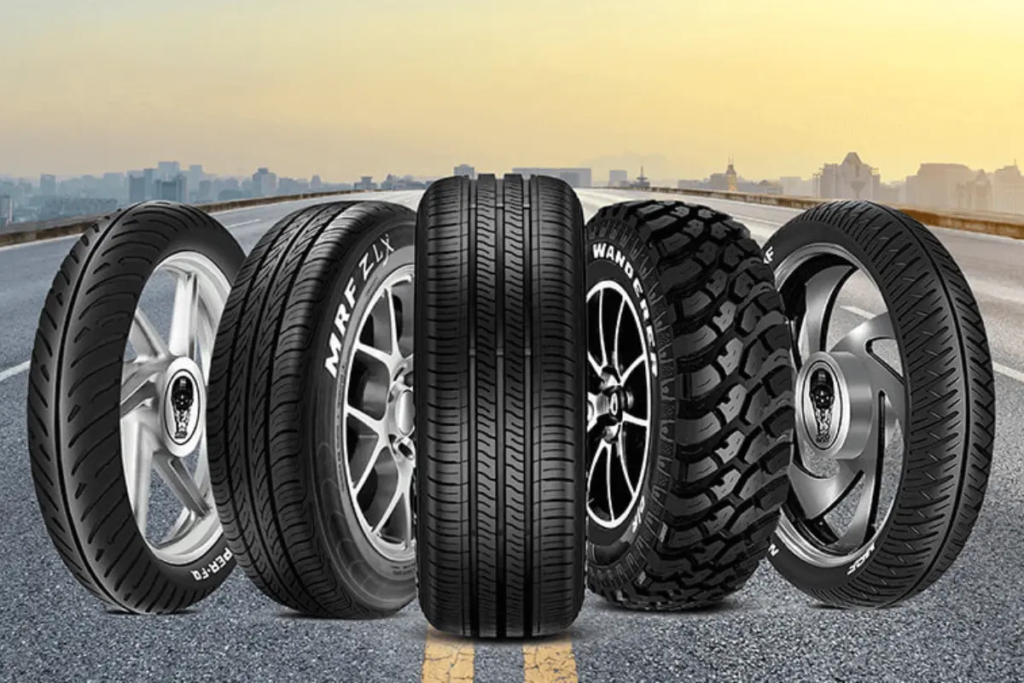
Madras Rubber Factory Ltd (NSE: MRF) is one of India’s largest and most trusted tyre companies, known for making strong and long-lasting tyres for cars, bikes, trucks, and tractors. With a wide range of tyres designed for safety, performance, and fuel efficiency, MRF is a top choice for drivers across India. The brand is popular for its durability, advanced technology, and nationwide service network, making MRF a leader in the tyre and rubber industry.
MRF Fundamental Analysis
| Metric | Value |
|---|---|
| Market Cap | ₹52,751 Cr |
| ROE | 11.57% |
| P/E Ratio (TTM) | 21.82 |
| EPS (TTM) | 5700.92 |
| P/B Ratio | 2.52 |
| Dividend Yield | 0.19% |
| Industry P/E | 19.68 |
| Book Value | 49,454.97 |
| Debt to Equity | 0.15 |
| Face Value | 10 |
MRF Share Price Target 2026
MRF share price target for 2026 is expected to range from ₹110000 to ₹160000. Here are three key factors that could affect the company’s share price in 2026:
- Unrivaled Brand Equity: MRF is the most recognizable tyre brand in India, known everywhere for its muscleman mascot and high quality. Because people trust this brand so much, the company can charge higher prices than its rivals. This strong pricing power keeps company profit margins safe and attracts big stock market investors.
- Huge Replacement Market Dominance: Most of its sales come from people buying new tyres to replace old, worn-out ones on their existing cars and trucks. Since vehicles on the road always need fresh rubber every few years, it makes steady money. This constant demand keeps company sales safe even during bad economic times.
- Broad Vehicle Segment Presence: It manufactures tyres for almost everything, including two-wheelers, passenger cars, heavy trucks, tractors, and fighter jets. This means it does not rely on just one single type of vehicle for revenue. If car sales drop, strong tractor or truck tyre sales help balance the loss.
MRF Share Price Target 2027
MRF share price target for 2027 is expected to range from ₹150000 to ₹180000. Here are three key factors that could affect the company’s share price in 2027:
- Massive Nationwide Dealer Network: It sells its products through a giant network of thousands of exclusive dealerships across India. This makes it super easy for everyday drivers in big cities and tiny villages to buy MRF tyres. New competitors find it extremely hard to build such a huge distribution system.
- Exceptionally Strong Balance Sheet: MRF keeps its total debts extremely low while holding huge amounts of cash reserves. Because the company owns its factories without owing money to banks, it pays almost no interest charges. Investors love this financial safety cushion because it keeps the business safe during deep market crashes.
- Premium Sports Sponsorship Deals: It spends heavily on sports marketing, like sponsoring famous cricket stars and major global racing tournaments. These big sponsorships keep the brand famous among young buyers and sports fans. This continuous popularity directly helps the company sell more premium, high-margin tyres for sports bikes and luxury vehicles.
MRF Share Price Target 2030
MRF share price target for 2030 is expected to range from ₹210000 to ₹260000. Here are three key factors that could affect the company’s share price in 2030:
- Original Equipment Manufacturer Partnerships: It supplies brand-new tyres directly to India’s top vehicle manufacturers right on the factory floor. When automobile production increases nationwide, it gets huge bulk orders automatically. These early factory installations also encourage vehicle owners to buy the exact same MRF brand when replacing tyres later.
- Heavy Research and Development Investments: The company spends millions of rupees developing advanced rubber compounds that last longer and save fuel. Their modern research labs create specialized tyres built specifically for rough Indian roads. Producing better, longer-lasting products keeps it well ahead of foreign and local tyre competitors.
- Growing International Export Footprint: Beyond India, the company exports its tyres to over 60 countries across Asia, Africa, and Latin America. Selling goods overseas brings in foreign currency revenues and reduces reliance on the Indian domestic market alone. Successful international expansion gives the stock extra long-term earnings growth potential.
MRF Share Price Target 2040
MRF share price target for 2040 is expected to range from ₹470000 to ₹530000. Here are three risks & challenges that could affect the company’s share price in 2040:
- Raw Material Price Fluctuations: Making tyres requires huge amounts of natural rubber and crude-oil derivatives like carbon black. When global oil or rubber prices suddenly spike, its manufacturing expenses go up fast. If it cannot raise tyre prices immediately, company profit margins get badly squeezed for several months.
- Automotive Market Cycle Downturns: A big part of its income depends on automakers building brand-new vehicles. If the economy slows down, people stop buying new cars and trucks, cutting factory orders sharply. Because the auto sector goes through regular ups and downs, its profits can drop during slow economic years.
- Electric Vehicle Transition Needs: Electric vehicles are much heavier than gas cars and deliver instant power, causing tyres to wear out faster. it must spend heavily to redesign quieter, stronger tyres suited for modern electric cars. If competitors launch better EV-specific tyres faster, it could lose its top market spot in the coming years.
MRF Share Price Target 2050
MRF share price target for 2050 is expected to range from ₹700000 to ₹900000. Here are three risks & challenges that could affect the company’s share price in 2050:
- Fierce Domestic Price Competition: The company faces tough rivalry from major Indian tyre brands like Apollo, CEAT, and JK Tyre. To win customers, competitors often discount their products heavily or offer longer warranties. Fighting off aggressive discount wars limits how much profit MRF can earn on its lower-end tyre ranges.
- Expensive Capital Expansion Projects: Building giant new tyre factories and upgrading old machinery requires continuous, massive cash spending. If a newly built factory experiences production delays or low demand, those heavy expenses eat into profits. High capital spending without fast sales growth can temporarily lower the company’s return on investment.
- Strict Environmental Pollution Rules: Rubber factories produce chemical emissions and toxic waste that can harm local surroundings if mismanaged. Governments are enforcing stricter green laws requiring cleaner production processes and better recycling standards. Meeting these strict environmental requirements forces the company to spend extra money continuously on upgraded pollution-control equipment.
MRF Share Price Target 2026 to 2050
| Year | Target Price (₹) |
|---|---|
| 2026 | 110000 to 160000 |
| 2027 | 150000 to 180000 |
| 2028 | 170000 to 200000 |
| 2029 | 190000 to 230000 |
| 2030 | 210000 to 260000 |
| 2040 | 470000 to 530000 |
| 2050 | 700000 to 900000 |
Also Read: Lodha Share Price Target
MRF Shareholding Pattern
| Category | Holding |
|---|---|
| Public | 42.71% |
| Promoters | 27.77% |
| FII | 17.42% |
| DII | 12.10% |
MRF Key Competitors
Apollo Tyres, CEAT, JK Tyre & Industries, Goodyear India, Bridgestone India, Michelin India, Yokohama India, Continental India, Pirelli India, and Falken India.
Disclaimer: All the information provided in this article is for educational and infomational purposes only. We are NOT a SEBI registered investment advisor. DateUpdateGo always advises seeking guidance from a certified financial advisor before making any investment-related decisions.
