
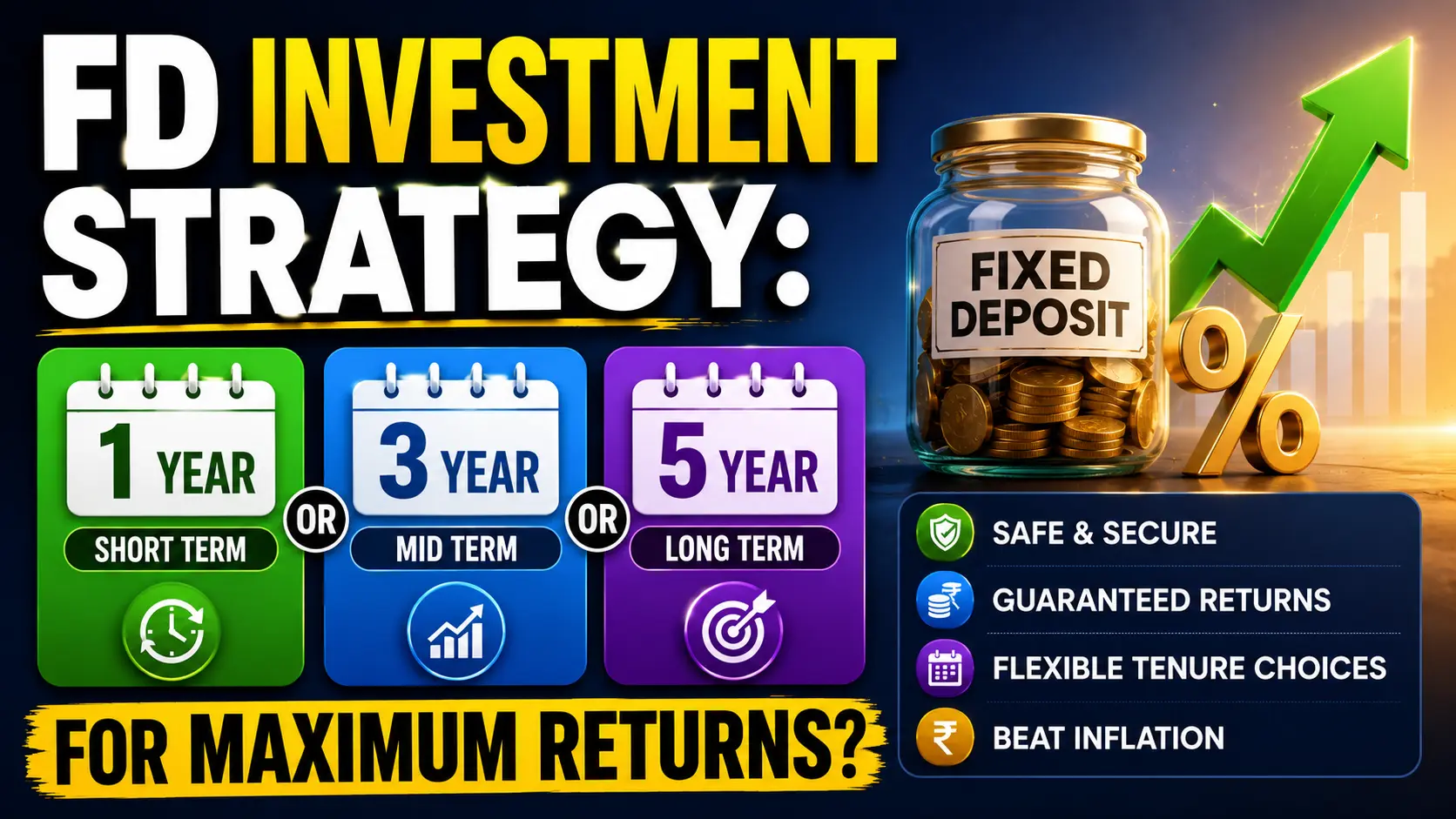
Fixed deposits remain a reliable option in India, but choosing the right tenure—1 year, 3 years, or 5 years—depends on liquidity needs, returns, and tax benefits, rather than just the interest rate
Fixed deposits (FDs) remain one of the most reliable investment options for traditional investors in India who prefer safety over risk. With guaranteed returns and capital protection, FDs are especially popular among those seeking consistent income without market fluctuations. However, choosing the right tenure has become a bit more difficult as banks offer different interest rates for different tenures.
Investors often face confusion when deciding between short-term and long-term deposits. While higher interest rates may seem attractive, factors such as financial goals, liquidity needs, and tax planning play an equally important role in making the right decision.
One-Year FD
One-year FDs are ideal for those who prefer flexibility and don’t want to lock up their funds for long periods. This option allows investors to quickly reinvest if interest rates rise. Currently, small finance banks are offering good returns, with rates reaching around 7.25%, while private and public sector banks are offering returns between 6.25% and 6.65%.
This is a good time for those who may need access to their funds in a short period of time. It also works well in a volatile interest rate environment, where investors prefer to remain flexible rather than commit for a long time.
Three-Year FD
A three-year FD strikes a balance between returns and commitment. It is ideal for investors who want better interest rates than short-term deposits but are not willing to take on long-term risk. Interest rates are quite attractive at this time, especially at small finance banks, where returns can go up to 7.50%.
Private banks offer slightly lower rates, typically around 6.45%, while government-backed options remain stable but offer less yield. This time is often chosen by investors who want good returns without having to wait too long to access their money.
Five-Year FD
Five-year FDs are designed for long-term investors who prioritize stability and tax savings. Under Section 80C of the Income Tax Act, investors can claim a deduction of up to ₹1.5 lakh annually by investing in tax-saving FDs with a five-year lock-in period.
Interest rates in this category can reach 7.90% at some small finance banks, while larger private banks offer around 6.40% to 6.50%. Public sector banks typically offer slightly lower returns, around 6%. Despite this, the additional tax benefit makes this option attractive for salaried individuals and long-term planners.
1 year vs 3 year vs 5 year?
Choosing between 1-year, 3-year, and 5-year FDs ultimately depends on individual financial priorities. If liquidity is essential, shorter tenures work best. For those who want to earn higher interest without locking up funds for too long, a three-year FD is a good compromise. Meanwhile, long-term investors seeking tax savings and stable returns may find a five-year FD more beneficial.
It’s also important to note that senior citizens generally receive higher interest rates across all time frames, making FDs even more beneficial for them.
Disclaimer: All the information provided in this article is for educational and infomational purposes only. DateUpdateGo always advises seeking guidance from a certified financial advisor before making any investment-related decisions.
