
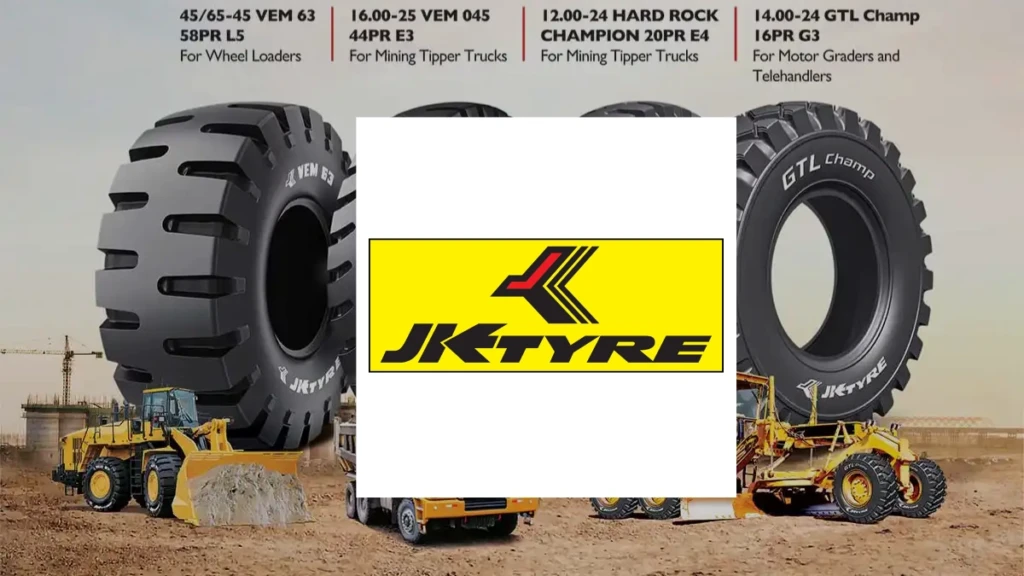
JK Tyre & Industries Limited (NSE: JKTYRE) is one of India’s leading tire companies, known for manufacturing high-quality tires for cars, bikes, trucks, buses, and large commercial vehicles. The company offers a wide range of products, including radial tires, off-road tires, and two-wheeler tires, designed to deliver safety, durability, and superior performance on all types of roads. With a strong presence in both domestic and international markets, JK Tyre also offers tire services such as wheel alignment, balancing, and maintenance through its service centers across the country.
JK Tyre Fundamental Analysis
| Metric | Value |
|---|---|
| Market Cap | ₹11,830 Cr |
| ROE | 14.59% |
| P/E Ratio (TTM) | 15.25 |
| EPS (TTM) | 26.91 |
| P/B Ratio | 1.95 |
| Dividend Yield | 0.97% |
| Industry P/E | 21.17 |
| Book Value | 210.23 |
| Debt to Equity | 0.81 |
| Face Value | 2 |
JK Tyre Share Price Target 2026
JK Tyre share price target for 2026 is expected to range from ₹350 to ₹600. Here are three key factors that could affect the company’s share price in 2026:
- Raw Material and Rubber Costs: Natural rubber and crude oil products make up a large part of tyre production costs. When rubber prices go up, making tyres becomes much more expensive. If the company cannot pass these higher costs to customers quickly, its profits will fall. Therefore, changing raw material prices directly impacts investor confidence and the company’s stock price.
- Leadership in Truck and Bus Radial Tyres: It is a major market leader in radial tyres for trucks and buses in India. As India builds more highways and moves more goods by road, the need for durable commercial tyres grows rapidly. Strong sales in this heavy-duty vehicle section boost total company revenue, which helps keep the overall share price strong and attractive to buyers.
- High Demand from the Replacement Market: Most of the company’s income comes from people replacing old, worn-out tyres on existing vehicles. Even when new vehicle sales slow down, drivers still need to replace their old tyres to stay safe on the road. This steady stream of replacement sales provides a consistent money flow, giving investors peace of mind during tough economic periods.
JK Tyre Share Price Target 2027
JK Tyre share price target for 2027 is expected to range from ₹540 to ₹710. Here are three key factors that could affect the company’s share price in 2027:
- Growth in Passenger Car and SUV Tyres: More families in India are buying personal cars, premium vehicles, and sports utility vehicles today. JK Tyre is expanding its product range to make specialized, high-quality tyres for these modern cars. Selling higher-priced passenger tyres yields bigger profit margins, which boosts earnings per share and pushes the stock valuation higher in the financial market.
- Global Expansion and Export Business: The company sells its tyres in over one hundred countries across the world, including North America and Europe. Having factories in Mexico allows them to supply international markets quickly and efficiently. Growing export revenues reduce dependency on the Indian market alone, making total profits more stable and creating long-term value for stockholders.
- New Factory Capacity Expansion Plans: The company plans to invest money into expanding its manufacturing plants to produce twenty-four percent more tyres. Increasing factory capacity helps the company meet rising customer orders without facing product shortages. Investors view this planned expansion as a positive signal for future revenue growth, often leading to a rising stock price over time.
JK Tyre Share Price Target 2030
JK Tyre share price target for 2030 is expected to range from ₹990 to ₹1100. Here are three key factors that could affect the company’s share price in 2030:
- Innovation in Smart and Electric Vehicle Tyres: The company designs special tyres for electric vehicles that save battery energy and produce less noise. They also make smart tyres with sensors that check air pressure in real time. Being a technology leader in new vehicle trends attracts eco-friendly buyers, creates competitive advantages, and convinces investors that the company is ready for the future.
- Relationships with Major Vehicle Makers: It sells tyres directly to leading car, truck, and tractor makers across India. When these automobile companies build and sell more vehicles, they buy huge numbers of tyres directly from factory assembly lines. Strong partnership agreements with major vehicle brands keep sales volume steady and protect the business share price from sharp drops.
- Smart Debt Management and Lower Interest Payments: Borrowing money to build factories creates debt that requires interest payments every year. When the company repays its loans and lowers total debt, it spends less money on interest expenses. Saving on interest costs increases net profit margins, making the company financially healthier and more attractive to institutional buyers in the stock market.
JK Tyre Share Price Target 2040
JK Tyre share price target for 2040 is expected to range from ₹2400 to ₹2900. Here are three risks & challenges that could affect the company’s share price in 2040:
- Price Fluctuations in Natural Rubber and Crude Oil: The main danger for tyre makers is sudden price spikes in natural rubber and crude oil. Rubber tree production depends heavily on weather conditions, while oil prices swing due to global politics. If raw material prices shoot up unexpectedly, profits shrink fast, causing investors to worry and sell off their shares in the market.
- Fierce Competition from Other Big Tyre Brands: It faces intense rivalry from major Indian brands like MRF, Apollo, CEAT, and Balkrishna. To win over price-sensitive customers, companies often lower prices or offer heavy discounts. Fighting strong competitors for market share limits how much the company can charge for tyres, which can put heavy pressure on profit margins over time.
- Economic Slowdowns in the Auto Industry: When the economy slows down, people buy fewer cars and businesses buy fewer commercial trucks. Since tyre demand relies directly on vehicle usage and vehicle production, an auto industry slump leads to lower tyre sales volume. A prolonged drop in factory output can hurt overall revenue, dragging down the company’s share performance.
JK Tyre Share Price Target 2050
JK Tyre share price target for 2050 is expected to range from ₹5700 to ₹6600. Here are three risks & challenges that could affect the company’s share price in 2050:
- Foreign Currency Changes and International Trade Problems: Selling tyres overseas exposes the company to foreign currency changes and trade tensions. If the Indian Rupee changes value sharply against foreign currencies, export earnings can suddenly drop in rupee terms. Shipping delays, higher sea freight charges, or sudden import tariffs imposed by other countries can also disrupt global delivery schedules and hurt earnings.
- Threat from Cheap Foreign Tyre Imports: Low-cost tyres imported from other Asian nations pose a constant threat to domestic pricing. Even with government import restrictions in place, cheap imported tyres can enter the market and lure price-focused vehicle owners away. This forces domestic companies like JK Tyre to adjust their pricing strategies, which can erode profit margins significantly.
- High Debt Burdens from Expensive Factory Upgrades: Building big new manufacturing plants requires taking on heavy bank loans and spending lots of cash. If the new factory expansion takes too long to finish or fails to generate expected sales quickly, loan repayment costs can burden company finances. High debt levels create financial risk and make investors hesitant during uncertain market times.
JK Tyre Share Price Target 2026, 2027, 2028, 2029, 2030, 2040, 2050
| Year | Target Price (₹) |
|---|---|
| 2026 | 350 to 600 |
| 2027 | 540 to 710 |
| 2028 | 660 to 800 |
| 2029 | 800 to 980 |
| 2030 | 990 to 1100 |
| 2040 | 2400 to 2900 |
| 2050 | 5700 to 6600 |
Also Read: Maruti Suzuki Share Price Target
JK Tyre Shareholding Pattern
| Category | Holding |
|---|---|
| Promoters | 50.55% |
| Retail and Others | 27.36% |
| Foreign Institutions | 15.94% |
| Mutual Funds | 4.70% |
| Other Domestic Institutions | 1.44% |
JK Tyre Key Competitors
MRF, Apollo Tyres, CEAT, Goodyear India, Bridgestone India, Michelin India, Continental India, Yokohama India, Balkrishna Industries, TVS Srichakra, Birla Tyres, Dunlop India, Metro Tyres, Ralson India, and JK Tornel.
Disclaimer: All the information provided in this article is for educational and infomational purposes only. We are NOT a SEBI registered investment advisor. DateUpdateGo always advises seeking guidance from a certified financial advisor before making any investment-related decisions.
